Found 582 Barrett's Esophagus trials
A listing of Barrett's Esophagus medical research trials actively recruiting patient volunteers. Search for closest city to find more detailed information on a research study in your area.

A Clinical Study Evaluating the data Utility and Usability of Invu on pregnant subjects during virtual survaliance sessions of Fetal and Maternal heart rates and blood pressure readings
The purpose of this study is to determine whether tracing data (maternal and fetal heart rate) collected remotely on the Nuvo Invu device can be used for clinical management of pregnant patients. We will be recruiting generally healthy pregnant women with singleton gestations who at at least 32 weeks gestation …

PRESTA- Promoting Recovery after Stroke with Amantadine
The research team aims to examine whether amantadine can help patients recover from stroke. This will be a blinded randomized clinical trial. We will randomize patients post-ischemic or hemorrhagic stroke either to the placebo arm or amantadine. Patients will be on study drug or placebo for 1 month but will …
Monitoring brain metabolism after glucose intake by MRI methods
Glucose is a major energy source for brain cells. Changes in blood glucose also leads to changes in supply or availability of glucose to brain cells. Changes in various brain metabolites when mapped in different areas of the brain will allow, an understanding of the effects of such changes in …

A Phase 3 Multicenter Study of Gleolan (Aminolevulinic Acid Hydrochloride) to Enhance Visualization of Tumor in Patients with Newly Diagnosed or Recurrent Meningiomas
This study is designed to investigate the safety, diagnostic performance, and clinical usefulness of Gleolan for the real time detection and visualization of meningiomas during tumor resection surgery. Potential patients who sign informed consent will be screened for eligibility before receiving an oral solution of Gleolan 3 hours prior to …
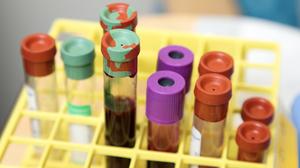
A5128: Plan for Obtaining Informed Consent to Use Stored Human Biological Materials (HBM) for Currently Unspecified Analyses
Some samples (for example, blood, tissue, fluids) taken from you during this or another research study might be useful for research at some later date. This study is being done so that your samples can be stored and used at some later date for research studies, including genetic testing. These …

Cardiac Amyloidosis Registry Study ("CARS")
This registry is a retrospective observational, multi-center study designed to collect data and analyze data retrospectively on patients with AL or TTR cardiac amyloidosis. Subjects under the care of the local investigator will be identified and consented. No patient visits or patient procedures will be required for the purpose of …

TRILOGY
The target population are patients at Penn Medicine undergoing elective bariatric surgery; and are additionally participating in POW-R study ( Protocol #843280) Patients will be recruited to undergo liver wedge and visceral adipose tissue biopsy and provide blood samples. Liver samples will be processed for RNA, metabolomics, and biochemical and …
Intraoperative electrophysiological recording in patients undergoing brain surgery
The purpose of this protocol is to allow for intraoperative electrophysiological recording from patients already scheduled to undergo a craniotomy that will expose the cerebral cortex. During surgery, a recording array will be briefly placed on the surface of the brain and signals will be recorded while the patient is …
UPCC 14122 A Phase 3 Study to Evaluate the Efficacy and Safety of Enobosarm in Combination with Abemaciclib (Enobosarm Combination Group) compared to Estrogen Blocking Agent (Control Treatment Group) for the Second Line Treatment of ER+HER2- Metastatic Breast Cancer in Patients Who Have Shown Previous Disease Progression on an Estrogen Blocking Agent plus Palbociclib or Ribociclib
STAGE 1: This is an open-label safety study of enobosarm 9 mg QD coadministered with a CDK 4/6 inhibitor (abemaciclib), 150 mg BID. STAGE 2: This study is a multicenter, randomized, open-label, two treatment arm, efficacy and safety study. Subjects will be randomized to the two treatment arms (Enobosarm Combination …
Pulmonary Vascular Complications of Liver Disease 3
The main purpose of this study is to determine if certain genes, hormones, or other factors predict the risk of developing lung vessel disease in patients with liver disease and whether they determine outcome. Patients in need of a liver transplant evaluation or have portopulmonary hypertension or are suspected of …
Please choose between Voice or SMS based delivery of verification code

or